
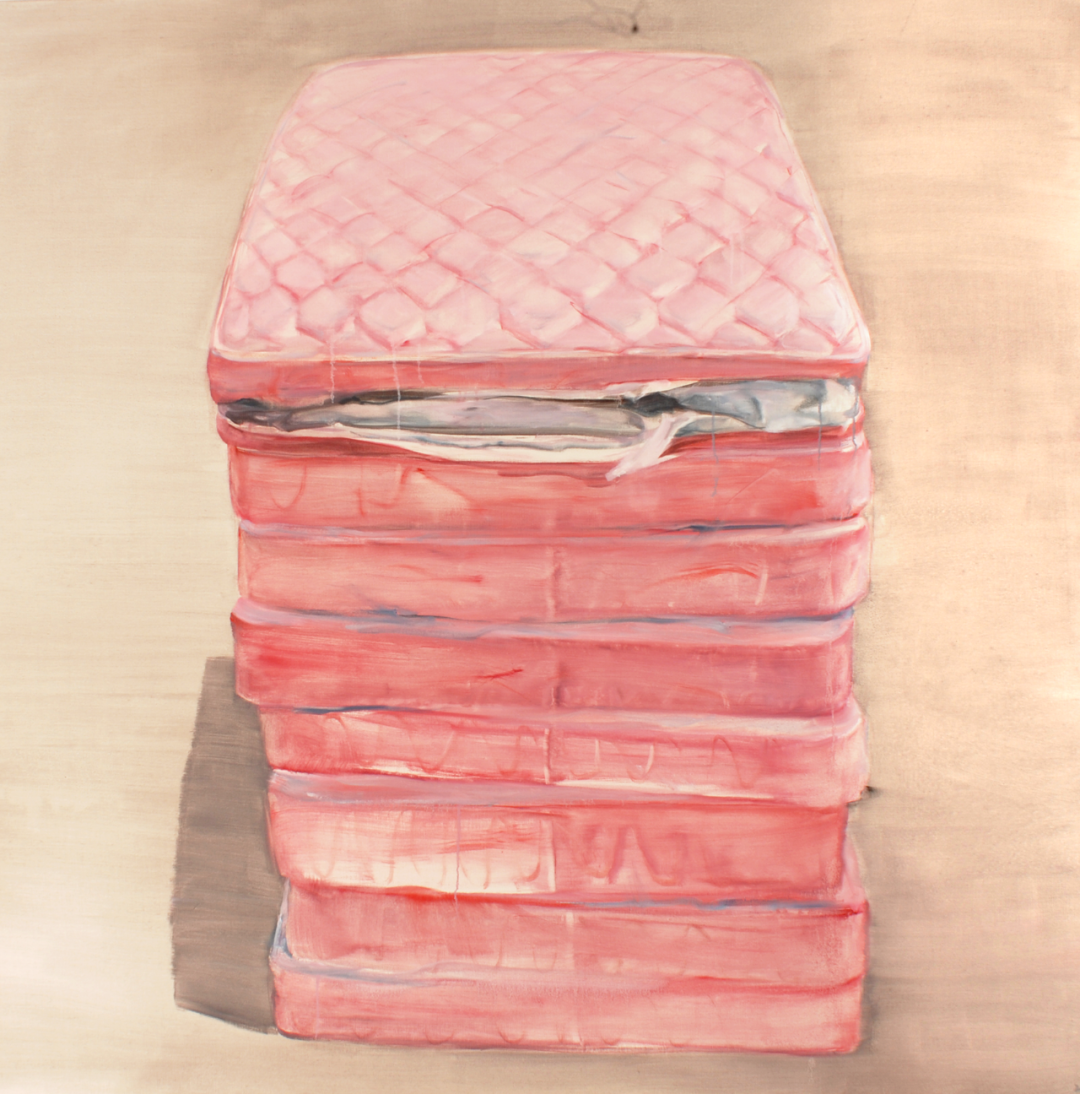
"The power of contemporary art is to convey and record the voice of reflection, while image is an important factor. "
- Song, Kexi
《床垫》 亚麻布油画 200×200 cm 2010
Shanghai Mingyuan Art Museum (hereinafter "M"): Although you received strict traditional training in painting at the College of Military Culture of the PLA National Defense University, your creative themes after leaving the army have completely departed from traditional painting and military history painting, what has contributed to this change?

《战友们》

《无名烈士》

《静物》

《北平抗日女子演讲团》

Song Kexi(hereinafter “Song”): This is a big topic because it's been a long time, more than thirty years since I graduated, and the transformation wasn't all at once. The College of Military Culture has benefited me a lot. After graduation, I went to the front line in Laoshan, went to the grassroots level to do counseling, participated in the All-Army Art Exhibition, and designed the stage sets for the All-Army Art Show, etc. All these were to use the knowledge I learned to reflect my own value. At that time, I felt that this was the way to master a technique, and I was convinced that "art is for the workers, peasants and soldiers". Until 1987, I attended the painting material technique class held by Professor Abraham Binkas of les Beaux-Arts de Paris. It was the first one dedicated to painting materials in China after the reform and opening up. Although it lasted only one month, it opened a window and made me feel completely different from what I had learned in the College of Military Culture. I learned that I could change my perception of painting through materials, which was a conceptual breakthrough in the 1980s.


As you know, the major art schools in China at that time were basically based on the revolutionary realism of the Soviet School. Chairman Mao's Speech at the Yan'an Symposium on Literature and Art has always played a dominant role in China's artistic creation, and is still the guideline of major art schools from Yangjialing in 1942 to today.The argument that "art comes from life but is higher than life" has the limitations of the times when you think about it now. At that time, there was very little real Western pure art coming in. In the mid-1980s, when I listened to a lecture by a famous professor, he also classified Picasso as a Western decadent art. I still remember going to the Art Museum of the Central Academy of Fine Arts to see Maksimov's original works, and I was already very excited at that time. Mr. Binkas has a saying: "Materials can lead to a change of concept", which is still very important today.
《椅子》系列II

《儿戏》系列

《戏游》系列

"The history of a city is the soil in which you grow,
and this is subtle."
M: From Harbin in the Northeast to Shanghai in the regions south of the Yangtze River, how has the completely different atmosphere of these two cities influenced your creative style?
Song:I arrived in Shanghai in 1990, and I couldn't find my way into the city, but I didn't expect to stay here for 32 years, far longer than my time in Harbin. Some things may seem marginal, but in fact will change the trajectory of your life. The October Revolution in Russia in 1918 saw a large number of Tsarist aristocrats, warlords and people from the arts and culture who had shunned the violence of the revolution flee to Harbin, making Harbin the first city in China to come into contact with Western art. It is said that at that time there were White Russians and later Japanese everywhere teaching music, art and dance, and this tradition has been passed down.
《哈尔滨冬景》
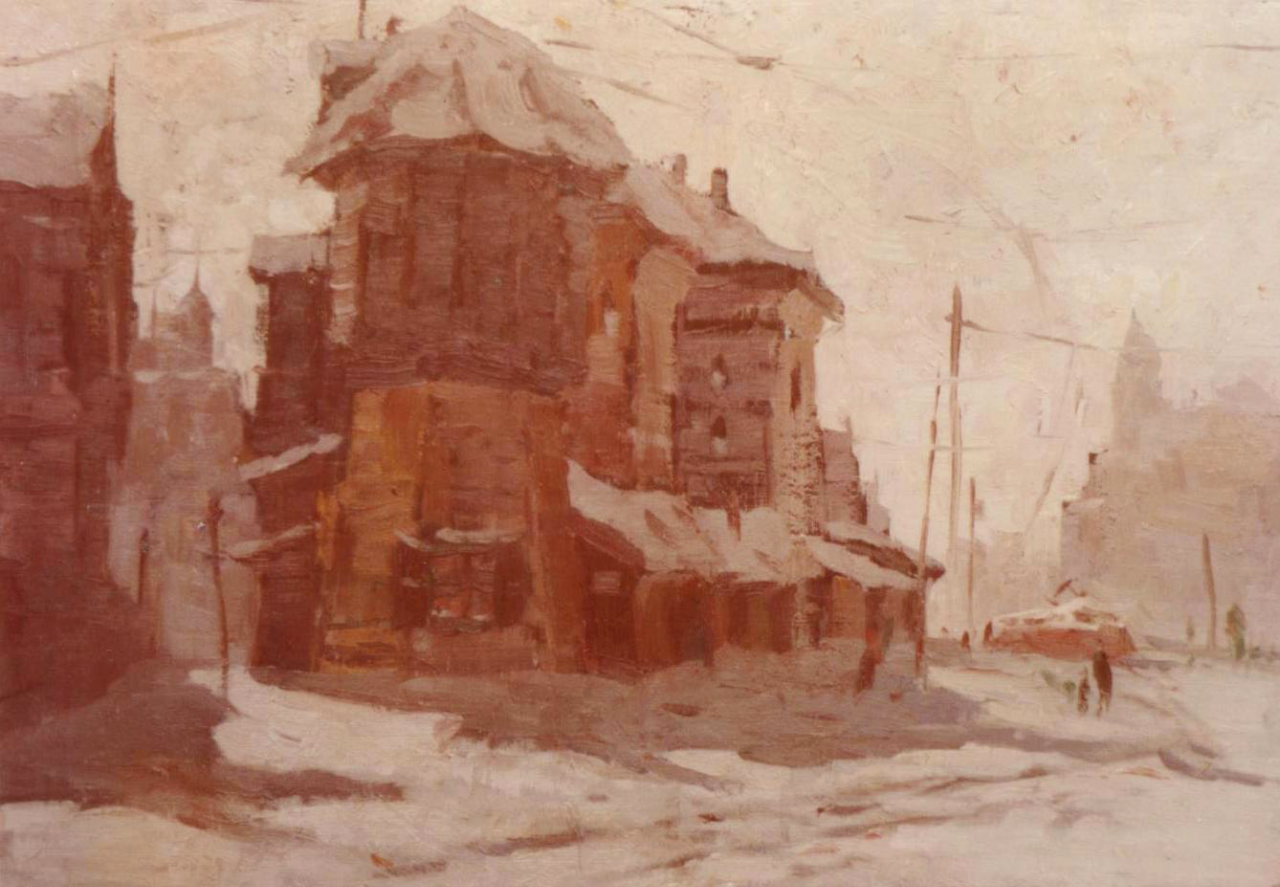
After the Cultural Revolution,it is said that Harbin's piano is still the most in the country. I remember that when I was a child, I studied painting in the city's Children's Palace, and many of the teaching aids were still Russian and Japanese, and even the earliest original painting books I saw were from The Wanderers. Nowadays, you can still see original Russian oil paintings in the homes of many intellectuals in Harbin, and there are many churches here, so religious holy paintings are also very popular, which had a great influence on my enlightenment in painting. In fact, the history of a city is the soil in which you grow, and this is subtle.

Although both cities have a strong soil of Western culture, Shanghai is more open and closer to the frontier in accepting modern art, which makes it a unique city for contemporary Chinese art. Seeing more will lead to change, the environment determines the perception, there are many examples of this, both cities have contributed to my perception change in stages.


"As long as the painting is sincere, both figurative and abstract are good."
M: Among all the Chinese contemporary artists, you have never given up the figurative expression of your brush. What is your reason for the insistence?
《get together》

《DDR》

《2014年3月8日》

《HOLLY WOOD》

《舶来品》

Song:Maybe it's because I have a lingering feeling of figuration. Some people say that it is a waste of time to come to Shanghai without abstraction, which is a bit too much, but I think it is reasonable, it shows that Shanghai has a high level of industrial civilization development, as several important contemporary art cities in the world. Although I paint figurative paintings, I always like to read abstraction, and most of my friends are also engaged in abstraction. Sometimes I paint aimlessly on the paper, and when I look back, there is no concrete image, I just feel comfortable. As long as the painting is sincere, both figurative and abstract are good, in my consciousness there is no intention, I just feel the best state of wandering.
记忆的轮廓》系列之二

《记忆的轮廓》系列之四

《手迹》系列之五

《蒙古勇士》

《三个皇后》

"I felt that everything could be replaced by dolls,
as the recognition of my personal painting language"
M: We found that the rose-red doll seems to be your favorite element, what's the reason behind it? What does this personalized symbol mean?
宋克西2009年香港个展招贴1

宋克西2009年香港个展招贴2

Song:I started to paint the Doll series in the mid-1990s. It was my second time to study at the Central Academy of Fine Arts, and it was also a coincidence because the Academy was moving to Dashanzi in 1994. Wu Xiaochang of the oil painting department said that the aura of the old campus of the Xiaowei Hutong was going to dissipate, so you should come to study for a year to change your mind and make some friends, so I quit my job in Shanghai and came to Beijing for a year. Now I think of it as a good period, a period of broadening of Chinese culture.
《玩偶系列》(早期作品)

《十全十美》

The early dolls were still very realistic, mainly a repair of childhood game memories, the happy physical motions were a reminder of childhood, and the use of dolls was also an attempt to erase the social identity of the characters. At a later stage, I felt that everything could be replaced by dolls, like politics, social roles, specific events, etc. The dolls became masks. I also favored Pop Art, having a fixed pattern or social scene to express my subjective consciousness. During this period, I painted the Exaggerated Doll, Child's Play, Musical Doll, Flying Doll and Gliding Doll series, and so on. Of course, I also wanted to use the dolls as the recognition of my personal painting language, and I still thought more, and now I look back, the dolls are not so innocent.
“The spatiality of installation cannot be replaced by flat painting,
especially the texture of the material is a unique visual power. “
M: In addition to your work on canvas, I have seen you make some installations in recent years. For you, what are the different roles of installation and painting in art creation?
Song:My installation is a kind of experimental work, which is a sense of a certain material. For example, correction tape is just a kind of stationery in daily life, but when it is painted on other objects, it has another layer of meaning. Painting it on a mirror is to cover up the truth, painting it on the ceramics is to cover up history, painting it on a hammer is to cover up authority, etc. Thus, the series Covered Objects was created. I also collected some animal teeth specimens, and once I accidentally pierced my hand with a tooth, I had the Teeth installation series, this group is to replace the biting part of the tool with teeth, looking at a kind of visual dislocation, a kind of fun and violent suggestion. The pink plastic gloves and wax works done earlier were kind of sexually suggestive, because the wax was not suitable for preservation, and then it did not continue to do so.
《被遮盖的物象》

《被遮盖的物象》

The spatiality of installation cannot be replaced by flat painting, especially the texture of the material is a unique visual power. Installation art is actually the perception of material, and the material is used to reflect the concept. Many artists are doing material installations at the same time, and there is a complementary role in this, not everything can be expressed in a flat surface. For me, the installation also serves another purpose, that is to know what can be discarded in painting.
L1100629

L1100648

L1100672

mmexport1660672051936

L1100669

"People are sick, like a change of time and space,
can not do any daily."”
M: In the face of the Wuhan epidemic, you once said, “The advantage of staying at home is that you can pick up things you haven't done before, find hobbies you've abandoned, and fill in the days that are gray”. So during the two months of quarantine, do you have any new works to share with us?
mmexport1660672061888

mmexport1660672071566

mmexport1660672076652

mmexport1660672085434

mmexport1660672090786

Song:A very strange feeling, the epidemic in Wuhan was anxiety and distant concern, one’s heart was still hot. Whereas the lockdown of Shanghai did feel chillingly gray and cold, the mind went blank and was suddenly unplugged. The government originally said to seal the control of five days, I think a shake will soon pass, but the back of the constant stack to more than two months, people are sick, like a change of time and space, can not do any daily, can only find some non-brain physical work to wake up the numb nerves. I like to repair tools, and in WeChat, I tease “Lu Ban said that good tools are to be maintained”. I have only painted a few works, mostly on paper, and have written some small articles, planning to publish a collection, tentatively named Half-cooked Rice, like my character. People are emotional creatures, no emotions are not good to eat, just like a bunch of half-finished products thrown in the studio.
mmexport1660760656217

mmexport1660760646368

mmexport1660760649592

mmexport1660760652880
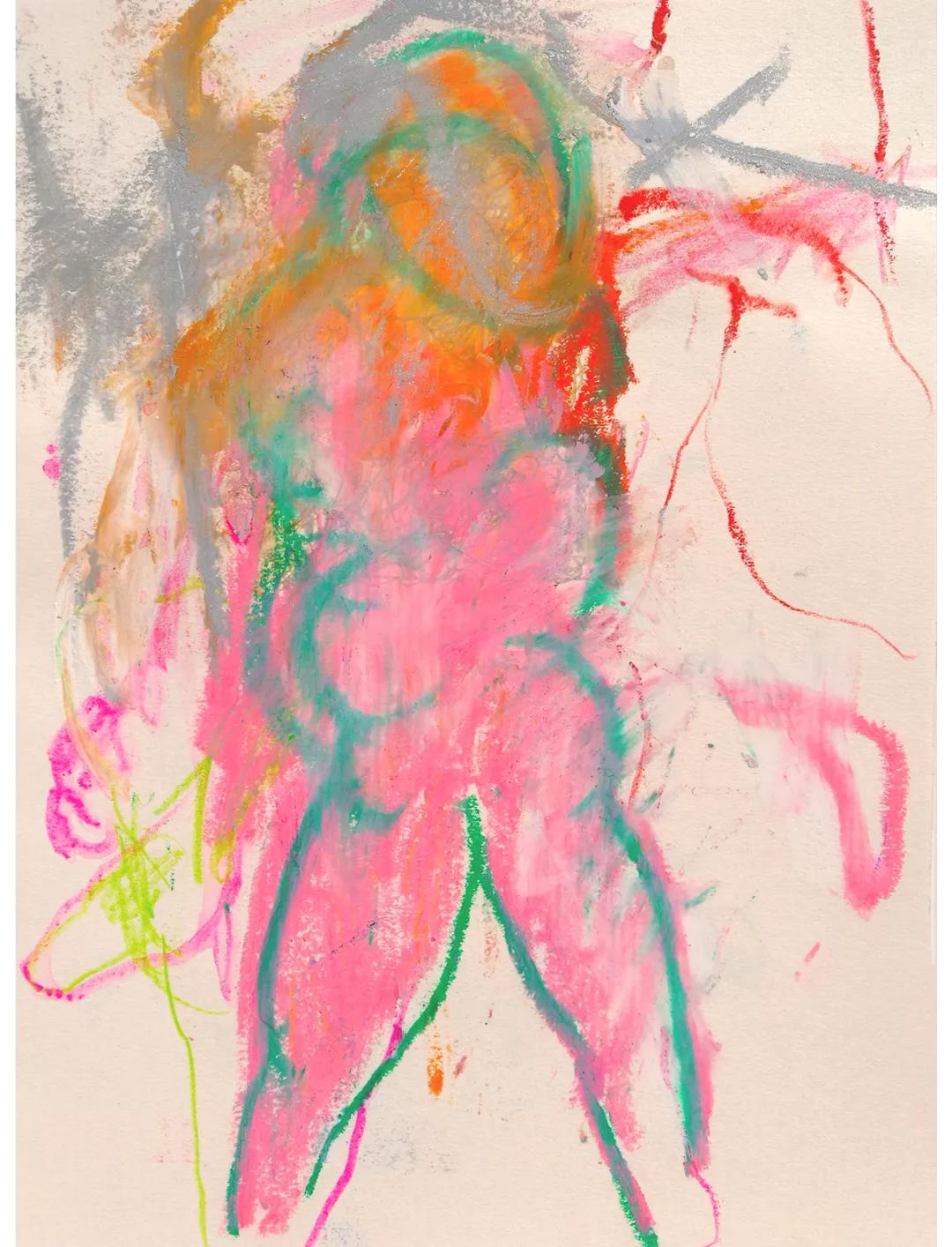
疫情期间涂在笔记本上的作品
"I can especially feel the uneasiness of losing freedom,
which makes me feel at a loss, dry, drifting, and desireless."
M: Has the experience of isolation in Shanghai given you a deeper feeling and understanding of the concept of city?
Song:The issue of lockdown is a bit painful, in a word, painful. People need space, that's why there are cities, and cities are mobile, and Habermas' act of interaction has defined the nature of cities. I can especially feel the uneasiness of losing freedom, which makes me feel at a loss, dry, drifting, and desireless. People and people suddenly became strange and distant, everything became like a shadow existence but untouchable. WeChat circle has become the main survival notice.It is better to stay away from this topic, because it is still going on today, the days of living by "code" do not know when it will end, I think about it, my scalp is tingling. I'll be willing to recall this life only when I'm far enough away from the event.
mmexport1660760635327

mmexport1660760642723

"There is nothing I can do about it,, but I am still reflecting on the relationship between individuals, groups and politics,
challenging the established discourse, questioning the legitimacy of ideology, etc.
M: What kind of power do you think contemporary art can convey at a time when the epidemic of COVID-19 and the world situation is still uncertain?
Song:Nothing can be done about it! I don't feel well all day after every nucleic acid test. I read an interview with Liu Yu in which she said, "Is there any point for ordinary people to care about politics?" This sentence I interpreted as an affirmation.
mmexport1660760632008

mmexport1660760628651
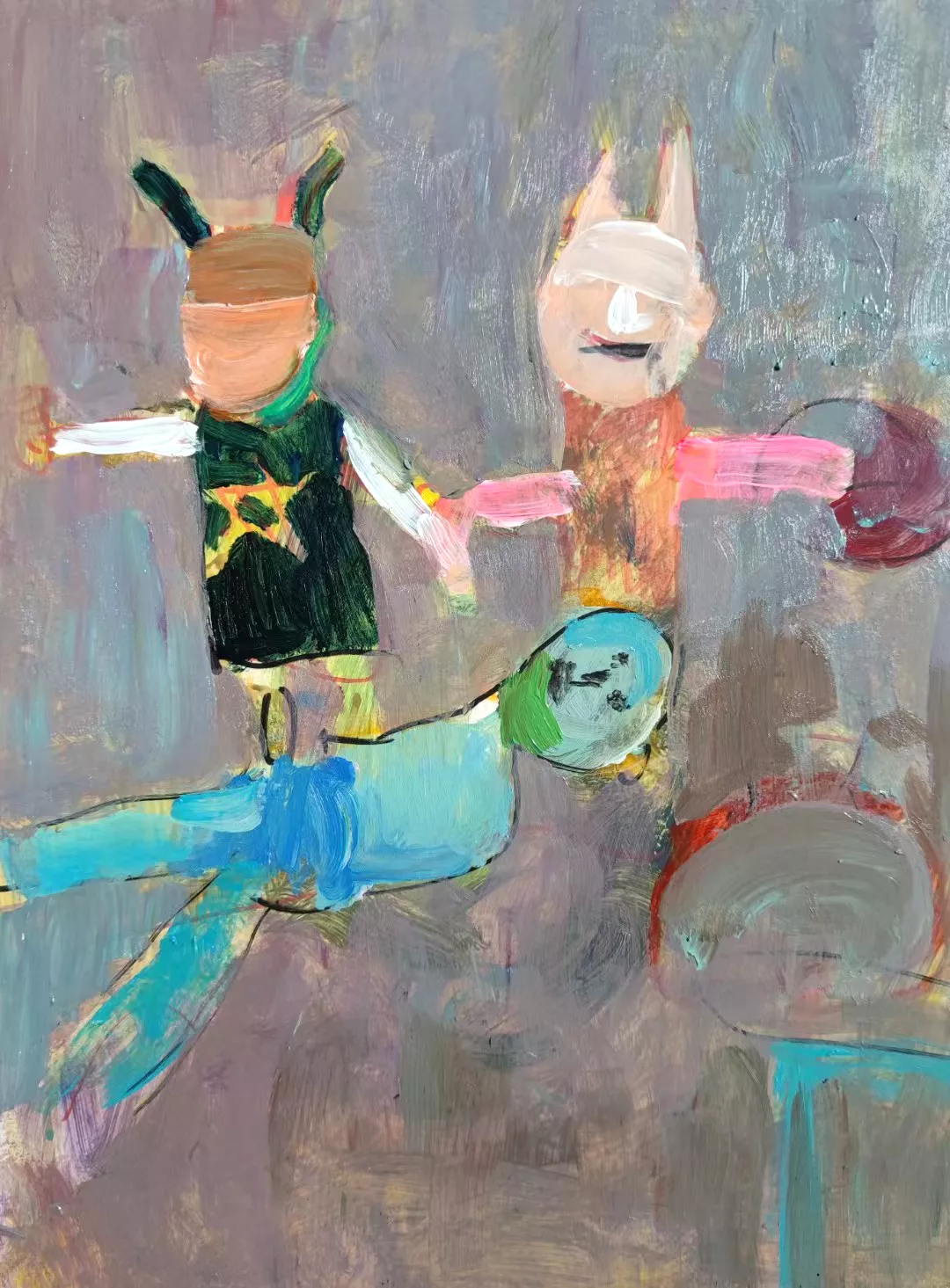
The power of contemporary art is to convey and record such voices. Many great events in history have been recorded by painting, music and writing before they gained power, and images are an important factor. I also know there is nothing I can do about it, but I am still reflecting on the relationship between individuals, groups and politics, challenging the established discourse, questioning the legitimacy of ideology, etc. This power is huge. The silence of all people is resistance, "We are the last generation" is also resistance.
mmexport1660760623324
mmexport1660760612767

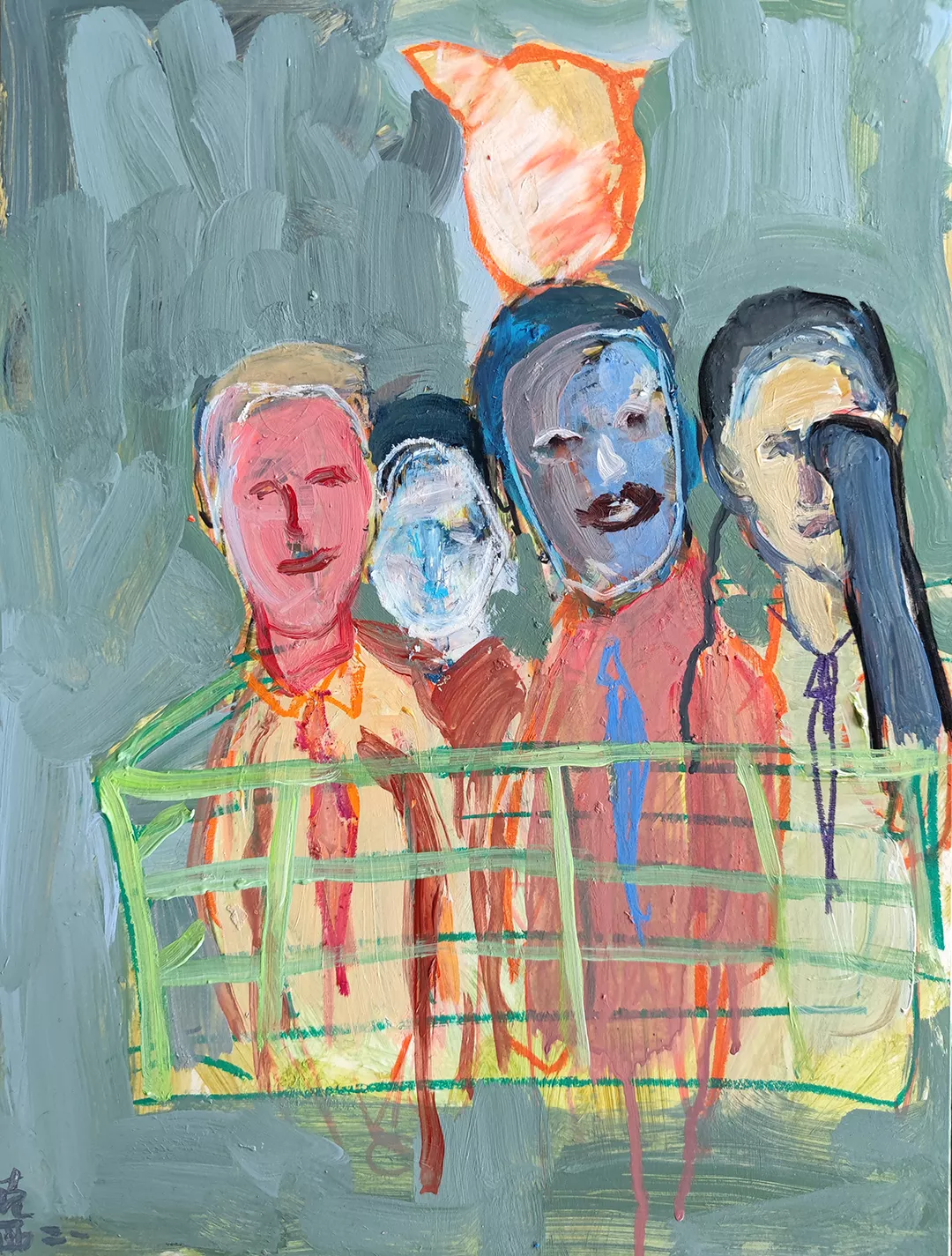
During the lockdown I was reading Beautiful New World by British author Aldous Huxley. The virtual future society in his book is a contradiction between human physical desires and free will. In such a society, individuals are deprived of their free will, they have no thoughts of their own, no different views on matters, they can only satisfy their physical needs, their meaning is just to live, that is, they are only skinned, contrary to the universal values we have been brought up with. We know there is not much we can do, but it must be done!
mmexport1660760607307

mmexport1660760617564

Song Kexi's Shanghai studio
Song Kexi,1962 born in Harbin. Now lives in Shanghai. He graduated from The PLA Art Academy in Beijing in 1983. He is a member of Chinese Artists Association, distinguished professor of Xu Beihong Art College of Shanghai Maritime University, director of Austria-China Cultural Exchange Association.
Recent Group Exhibitions:
2022 Beyond the Ordinary - Shanghai Epidemic Diary, Mingyuan Museum, Shanghai \ 2021 Rear Window Art - Invitational Exhibition, Rear Window Gallery, Hangzhou \ 2021 With Luo has a Cause - Four People Invitational Exhibition, Art Gallery, Luoyang \ 2020 Near City - Invitational Exhibition of Contemporary Artists, Maries Art Museum, Shanghai \ 2019 In the Extreme - Beijing and Shanghai Contemporary Art Masters Invitation Exhibition, Cube Art Museum, Shanghai \ 2018 Laughing and Forgetting - Exhibition of Works by Yu Qiping, Song Kexi and Chai Yiming, De Heart Center, Shanghai \ 2018 The Different Guest - Exhibition of Contemporary Art of the New Sea People, Chun Art Museum, Shanghai \ 2018 One Flat - Shanghai Paper Art Exhibition, Chun Art Museum, Shanghai \ 2017 Espiritu de Carmesi - Exposicion de ZFotografias de Ding She, Song Kexi y Yang Dongbai, Chimney Art Center, Shanghai \ 2017 PLAY - Contemporary Art Exhibition, Chun Art Museum, Shanghai \ 2016 Spring Flowers and Autumn Fruits - Retrospective Exhibition, Duoyunxuan Art Museum, Shanghai \ 2016 Cocoon - Contemporary Art Works Exhibition, Chun Art Museum, Shanghai \ 2016 Drifting at Sea - Contemporary Artists' Works Exhibition, Shanghai Art Museum, Shanghai \ 2015 Urban Drawer - Invitational Exhibition of Contemporary Artists, Xuhui Art Museum, Shanghai \ 2015 Shanghai Busan Contemporary Art Works Exchange Exhibition, Busan Museum of Contemporary Art, Shanghai \ 2015 Shanghai International Contemporary Art Exchange Exhibition, MeOU Art Center, Shanghai \ 2015 Light of the City - Shanghai Urban Contemporary Sculpture and Installation Art Fair, Cimen Space, Shanghai \ 2015 New Clans at Sea - Contemporary Artists' Works Exhibition, Shanghai Art Museum, Shanghai \ 2014 Far and Near - 2014 Shanghai Small-Scale Oil Painting Exhibition, North Bund Space, Shanghai \ 2014 Disney Dialogue Contemporary Art - Disney 90th Anniversary Contemporary Art Invitational Exhibition, Guangzhou, China / Orlando, USA \ 2013 On 2013 - Shanghai Contemporary Masters Art Exhibition, Residence of general Zhou Art Space, Shanghai \ 2013 Trilateral Exhibition--Touring Exhibition of Works by Chinese, German and Korean Artists, Busan, Korea / Shanghai, China / Hamburg, Germany \ 2012 SHANGHAI NOW - Shanghai Contemporary Art Exhibition, Melbourne, Australia \ 2012 Exchange Exhibition of Chinese, Japanese and Korean Artists, Seoul, Korea \ 2012 Making Mountains and Water - The First County Biennale, Gaomi, Shandong \ 2012 Wind on the Water - Shanghai Zhejiang Oil Painting Exhibition, North Bund Space, Shanghai \ 2011 Chinese Bonsai - Contemporary Artists Nomination Exhibition, Museo de Arte Contemporaneo de Valencia, Spain \ 2011 Shanghai Fine Art Exhibition, Chinese Art Palace, Shanghai \ 2010 Eastern Form and Western Style - Joint Exhibition of Shanghai and Sichuan Painters, Chengdu Art Museum, Chengdu \ 2010 The Way of Separation and Harmony - Contemporary Artists Nomination Exhibition, 99 Art Space, Shanghai \ 2010 Handwriting - Shanghai Small Oil Paintings Exhibition, North Bund Space, Shanghai \ 2009 Miami Asian Contemporary Art Fair, Miami, USA